In short
Americans are treated like other foreign nationals under Thai property law. A qualifying condominium unit can normally be owned directly in your own name within the building's foreign ownership quota. Land is a separate question, so a villa purchase depends on how rights to the house and the land are documented and verified. The purchase itself is straightforward when you use an independent Thai attorney, confirm the ownership route in writing before paying anything, and plan the money transfer with your Thai bank before you wire funds.
Sergey Vinogradov · Published: August 2026 · Last reviewed: August 2026 · Reading time: approx. 18 minutes
Overview: what this guide covers
Hua Hin is a coastal town roughly two and a half to three hours south of Bangkok by road. It has a long-established residential market, a mix of condominium towers along the beach road and villa communities inland toward the hills, and a resident foreign population that skews older and more permanent than in Thailand's island markets.
This guide is written for buyers holding U.S. citizenship or U.S. residency who are looking at a home for retirement, seasonal use, part-year living or eventual full-time residence. It covers ownership rules, the purchase sequence, money movement from a U.S. bank, purchase and ongoing costs, the differences between completed and off-plan property, and the practical realities of living there.
It is educational material, not legal, tax or immigration advice. Rules change and individual circumstances differ. Every point below should be verified for your specific transaction by an independent Thai attorney, and U.S. tax questions should go to a qualified U.S. tax professional.
Why Americans consider Hua Hin
The reasons buyers give tend to cluster. Cost of living is lower than comparable coastal markets in the United States. Private healthcare is accessible and, for many procedures, considerably cheaper than U.S. equivalents. The town is quieter and more residential than Phuket or Pattaya, which suits buyers who want a home rather than a resort.
Access matters too. Hua Hin is reached by road from Bangkok's two international airports, so long-haul connectivity is genuinely good even though the local airport itself has very limited scheduled international service.
The counterweights are real. Hua Hin is not a walkable city in the American sense, the rainy season is genuinely wet, cultural and language differences are constant rather than occasional, and property here is a lifestyle purchase before it is anything else. Nobody should buy on the assumption that Thai property prices only move upward.
Condominium or villa: the first real decision
This decision drives nearly everything else — ownership route, cost profile, maintenance burden and how easy the property is to leave empty for months at a time.
A condominium is the simpler legal path. Within the building's foreign quota, a unit can be registered in your own name, the building's juristic person handles the common areas, and you can lock the door and fly home. A villa gives you space, privacy, a private pool and land, but the land question is a separate legal analysis and the maintenance never stops.
| Consideration | Condominium | Villa |
|---|---|---|
| Ownership route | Direct foreign freehold possible within quota | Depends on how house and land rights are documented |
| Legal complexity | Lower and more standardized | Higher; requires case-by-case review |
| Lock-and-leave | Straightforward | Needs a caretaker or management arrangement |
| Space and privacy | Limited | Substantially greater |
| Ongoing costs | Common-area fee, sinking fund, utilities | Pool, garden, pest control, repairs, community fee |
| Resale pool | Foreign and Thai buyers, quota permitting | Depends heavily on the legal structure in place |
What foreigners can own
Thai law distinguishes sharply between a condominium unit in a registered condominium and land. A foreign national may hold a condominium unit in their own name where the building's foreign ownership limit allows it. Ordinary direct ownership of land by a foreign individual is restricted, with narrow statutory exceptions that are not the normal residential buying route.
This is why villa marketing in Thailand uses more varied language than condominium marketing. Terms like leasehold, superficies, usufruct and company ownership all describe different legal positions with different consequences for duration, succession and resale.
The foreign condominium quota
Foreign ownership within a registered condominium may not exceed 49% of the aggregate unit area of all units in that condominium. The limit applies to the building as a whole and is measured by area, not simply by counting apartments.
In practice this means a unit being advertised to you is not automatically available as foreign freehold. Quota is consumed as units are registered to foreign owners, and resale units can carry different ownership status depending on how the previous owner held them.
Ask the developer or seller to confirm in writing that the specific unit can be registered in a foreign name, and have your attorney verify that confirmation against the juristic person's records before you make an irreversible payment.
Villa and land considerations
For a villa, treat the house and the land as two separate legal questions. Rights to the structure can be documented differently from rights to the plot underneath it, and a strong position on one does not fix a weak position on the other.
A registered lease of land may generally be registered for a term of up to 30 years. Marketing that advertises "30+30+30" is describing a contractual expectation of future renewals, not a single registered 90-year right. Renewals depend on the parties, the law and the Land Office at the time of renewal.
Nominee arrangements — where Thai individuals or a Thai company hold land on a foreigner's behalf without genuine commercial substance — carry serious legal risk and should not be treated as a routine solution. If a structure is proposed to you, the correct response is an independent legal opinion, not reassurance from the seller.
The typical buying process
The sequence below is the normal shape of a Hua Hin transaction. Timing varies: a completed resale condominium can move from reservation to transfer in a few weeks, while an off-plan villa runs over the construction period.
- Shortlist properties and inspect them in person, or through someone acting for you.
- Appoint an independent Thai attorney before committing money.
- Confirm the ownership route in writing for the specific unit or plot.
- Pay a reservation deposit against clear written refund terms.
- Legal due diligence: title, encumbrances, permits, seller authority, contract review.
- Sign the sale and purchase agreement once your attorney has cleared it.
- Make contract or construction-stage payments per the agreed schedule.
- Plan the inbound transfer with your Thai bank and keep the documentation.
- Inspect and snag the property before accepting handover.
- Register the transfer at the Land Office and settle transfer-related fees.
Due diligence
Due diligence is where money is saved. For a condominium, it centers on the title of the unit, the juristic person's records, outstanding common fees, the foreign quota position and the contract. For a villa it extends to the land title itself, boundaries, access rights, permits and any construction obligations the seller still owes.
Use an attorney with no relationship to the seller, the developer or the agent introducing you. Ask for the scope of work in writing and for a written report at the end, not a verbal all-clear.
Sending money from the United States
Money movement causes more avoidable delays than any other part of the process. Funds for a condominium purchase generally need to arrive from abroad in foreign currency, be converted in Thailand, and be evidenced correctly so the Land Office accepts them at registration.
Before you wire anything, coordinate with the receiving Thai bank and your attorney on the exact account name, the wording of the transfer purpose, the required documentation and how the evidence of inward remittance will be issued. Send from an account in the buyer's own name; funds arriving from a third party create problems that are difficult to correct after the fact.
Purchase costs
Beyond the purchase price, budget for legal fees, transfer-related fees and taxes settled at registration, furnishing, and an independent inspection or snagging survey.
Thailand's standard framework for a property transfer may include a transfer fee calculated on appraised value together with transaction-specific withholding tax, specific business tax or stamp duty depending on the seller and the holding period. Not every item falls on the buyer: allocation between buyer and seller depends on the transaction type and on what the contract says. Any temporary government fee reduction must be re-verified as at the actual transfer date.
Ongoing ownership costs
Recurring costs are the part overseas buyers most often underestimate, particularly for villas.
- Condominium: common-area fee, sinking fund contribution, utilities, contents insurance, internal maintenance.
- Villa: pool servicing, garden, pest control, community or security fee, utilities, building insurance, repairs.
- Both: property management if the home sits empty for part of the year, and Thailand's land and building tax as applicable.
Completed versus off-plan
A completed property is what you see. You can inspect it, check the building in use, review the juristic person's records and know your carrying costs from day one. You typically pay more per square meter for that certainty.
Off-plan can offer better pricing, choice of unit and staged payments, but you are underwriting delivery risk: delay, specification changes and the developer's ability to finish. If you go off-plan, weigh the developer's completed track record heavily, and have your attorney examine the payment schedule, milestone definitions, delay remedies, specification list, variation rights, handover terms and defect liability period.
Living in Hua Hin
Hua Hin's daily rhythm is quiet. There are markets, a long beach, a strong golf scene, night markets, international restaurants and a substantial long-stay foreign community, but it is a town rather than a city and it lacks the depth of services found in Bangkok.
Seasonality is noticeable. High season brings Bangkok weekenders and international visitors; the rainy months are quieter and wetter. Many owners plan around this deliberately, using the property for part of the year and closing it up for the rest.
Healthcare
Private hospital care in Hua Hin is the single most common reason older buyers feel comfortable here. Bangkok Hospital Hua Hin serves international patients with English-speaking staff, and Bangkok's major hospitals are within road-transfer distance for specialist treatment.
Plan the funding side carefully. Medicare does not cover care received in Thailand, so most American residents rely on international private medical insurance or self-funding. Premiums rise sharply with age and pre-existing conditions may be excluded, so price cover before you commit to a move rather than after.
Transportation
Most residents drive or use a scooter. Sidewalks are inconsistent and distances between the beach road, the malls and inland villa communities are longer than they look on a map, so a car is close to essential outside the town center.
For international travel, plan around Bangkok. Road transfer to Suvarnabhumi typically runs around three hours depending on traffic, and a rail service also connects Hua Hin to Bangkok. Hua Hin's own airport has very limited scheduled service and should not be assumed in your travel planning.
Retirement considerations
If Hua Hin is intended as a retirement base, test the assumptions before you buy. Spend a full rainy season here. Price health insurance at your actual age. Consider how the property works if one partner is no longer driving, and whether a two-story villa on a hillside plot still suits you at eighty.
Also think about exit. A property that is easy to buy is not automatically easy to sell. Simpler ownership structures, well-managed buildings and locations with steady demand tend to resell more predictably than unusual structures or remote plots.
U.S. tax considerations
U.S. citizens and resident aliens are generally subject to U.S. tax reporting on worldwide income, so rental income from a Thai property can create U.S. reporting obligations, with foreign taxes potentially interacting with foreign tax credit rules.
Directly held foreign real estate is not a specified foreign financial asset that must be reported on Form 8938 merely because it is foreign real estate. Holding property through a foreign company, partnership or other entity can create very different and significantly heavier reporting consequences. Foreign bank accounts are a separate matter again, and an FBAR filing requirement may apply where the aggregate value of relevant foreign financial accounts exceeds the applicable threshold.
Get U.S. tax advice before choosing an ownership structure, not after the structure is in place.
Visa considerations
Buying a condominium or villa in Thailand does not, by itself, give a foreign buyer the unrestricted right to live in Thailand permanently. Property ownership and immigration status are separate systems.
Long-stay options depend on age, income, employment, investment or other qualifications. Some investment-based programs may count qualifying Thai property toward certain investment requirements, but that does not mean any purchase qualifies you for a visa. Rules change; verify with official sources at the time you apply, and never buy on the strength of a verbal visa promise from a salesperson.
Common mistakes
Most problems we see come from the same short list.
- Paying a reservation deposit before the ownership route for that specific unit is confirmed in writing.
- Using the developer's recommended lawyer as the only legal review.
- Treating "30+30+30" as an already secured 90-year registered right.
- Wiring funds from a third-party account, or with transfer wording the receiving bank cannot use.
- Budgeting the purchase price but not the recurring costs of a pool, garden and empty-house management.
- Buying off-plan on the strength of renderings without examining the developer's completed projects.
- Assuming a property purchase resolves visa status.
How Buy Hua Hin Homes selects properties
We work with a deliberately small list — eight developments — rather than a full market inventory. Selection is based on the developer's completed track record, build quality we can inspect, location logic for the way foreign owners actually live here, and clarity of the ownership route being offered.
We say plainly what we like and what a buyer should consider about each project, and pricing and availability are confirmed individually before presentation rather than published as a fixed promise.
Selected Properties
The current selection spans beachfront and branded condominiums through to mountainside and hillside villa communities, giving a workable range for both lock-and-leave seasonal use and full-time living.
Each listing sets out positioning, price context, status, ownership notes and the practical trade-offs, with project information reviewed as at August 2026.
Frequently asked questions
Sources & further reading
- Condominium Act and related regulations — Royal Thai Government
- Land Office procedures and title documentation — Department of Lands, Thailand
- Foreign exchange regulations and inward remittance documentation — Bank of Thailand
- Reporting foreign income and assets for U.S. taxpayers — Internal Revenue Service
- Long-term resident and investment visa criteria — Thailand Board of Investment
Related selected properties
Related articles

Ownership & Legal
Can Americans Buy Property in Thailand? A 2026 Guide
American citizens are treated like other foreign buyers under Thai property law. This explains what that means for condominiums, villas and land, and where independent legal review is essential.
Reading time: approx. 12 minutes

Ownership & Legal
Can Foreigners Buy a Villa in Hua Hin?
A villa purchase splits into two legal questions — the house and the land. This explains how each is treated, what registered leasehold really means, and what to ask before you reserve.
Reading time: approx. 10 minutes
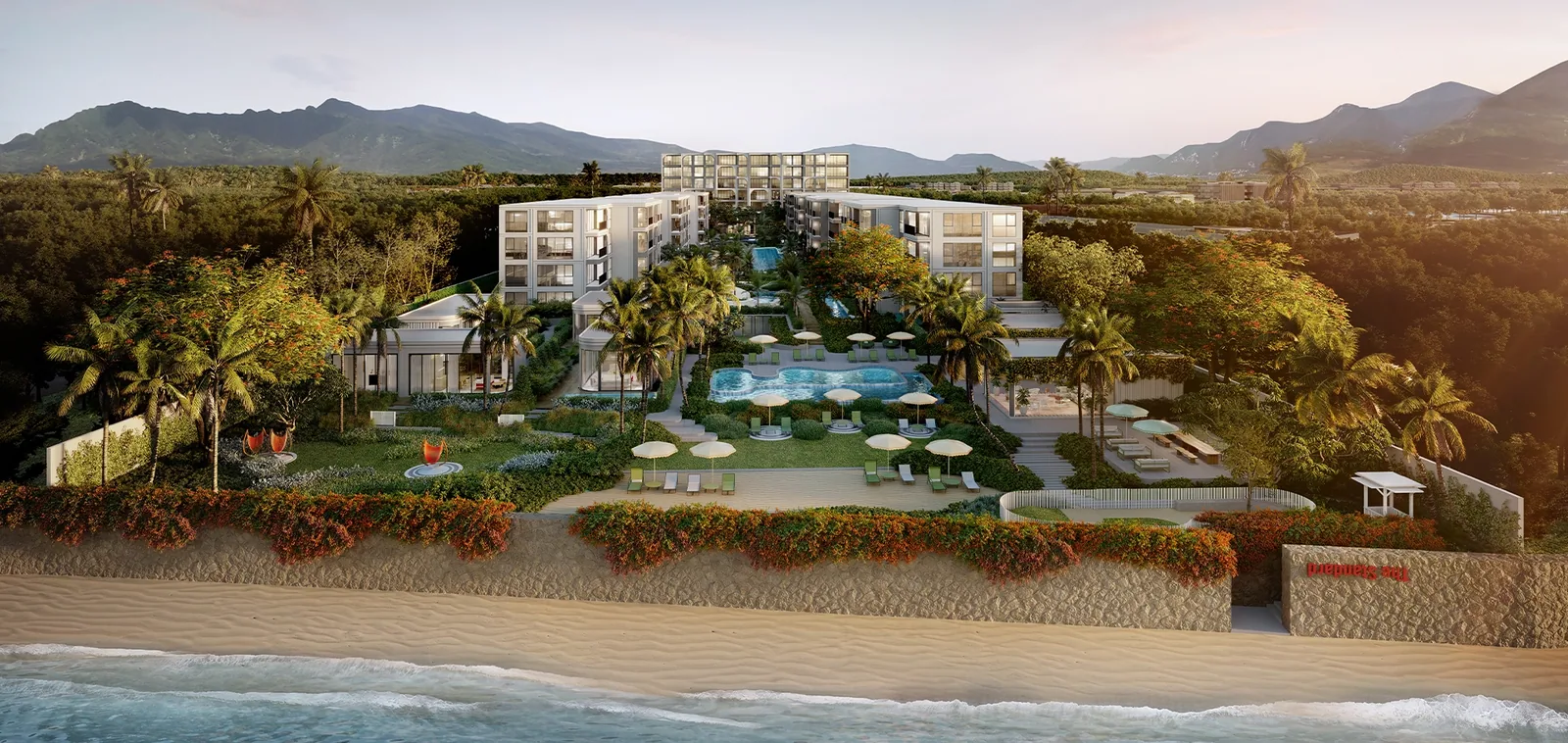
Ownership & Legal
Buying a Condo in Hua Hin as a Foreigner: Freehold, the 49% Quota & What to Check
Condominiums are the most straightforward route to owning property in Hua Hin as a foreigner — provided the specific unit is registrable within the building's foreign quota. Here is how that works and what to verify.
Reading time: approx. 11 minutes
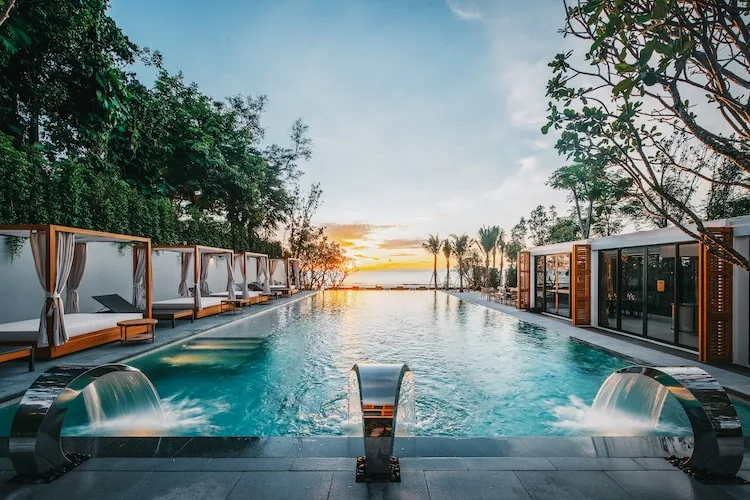
Ownership & Legal
Freehold vs Leasehold Property in Thailand: What Foreign Buyers Need to Know
Freehold, leasehold and building rights describe genuinely different positions. This explains what each means for a foreign buyer, and why marketing terminology often blurs them.
Reading time: approx. 9 minutes