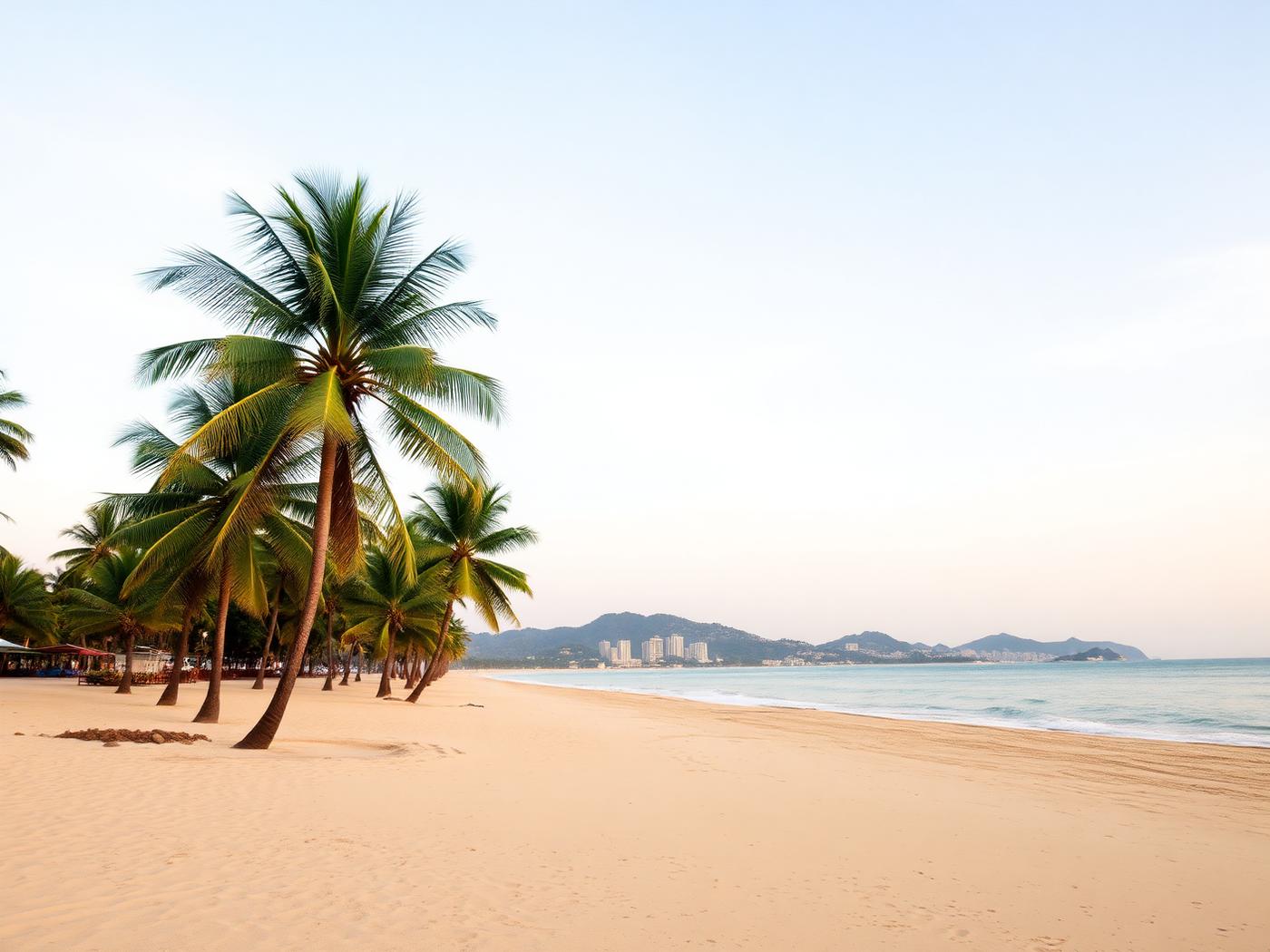
For an overseas buyer, its biggest strength is balance: coast, healthcare, golf, shopping and residential space without the intensity of Bangkok or the tourism scale of Phuket.
That balance also creates limitations. Hua Hin is not equally suitable for every lifestyle, and this page is written to help you decide rather than to sell you the town.
Why People Stay in Hua Hin
Plenty of people visit Hua Hin once and never think about it again. The residents who stay usually mention the same practical reasons rather than scenery.
- A slower pace than Bangkok, Pattaya or Phuket, with less tourism pressure outside peak weekends
- Daily life that works year-round rather than only in high season
- An established international community, including long-term European, American and Asian residents
- A genuine supply of detached villas with private pools, not only apartments
- Condominiums for buyers who want central or beachfront convenience
- Access to supermarkets, hospitals, banking and trades without travelling to Bangkok
- Bangkok close enough for flights, specialists and occasional city trips
That is not a universal preference. Some expatriates find Hua Hin too quiet, and a number move on to Bangkok or the islands after a year or two. It is worth spending time here in more than one season before committing.
One Hua Hin Address Can Feel Very Different From Another
Hua Hin stretches for many kilometres along the coast and several kilometres inland. Two properties with the same price can produce completely different daily routines.
Central Hua Hin
The most serviced part of town, and the easiest place to live without planning every errand around a car.
Better access to
- shopping centres and supermarkets
- the widest choice of restaurants
- hospitals and clinics
- the main beach
- banking and daily services
Potential tradeoffs
- denser development and more traffic in season
- little land per property
- clear price premiums close to the beach
Often better suited to condominium buyers.
Khao Takiab
A more resort-like coastal stretch south of the centre, and the setting for several beachfront condominium projects — The Standard and SASARA among them.
Better access to
- direct beach access in parts of the area
- local markets and seafood restaurants
- condominium-oriented, lock-and-leave living
Potential tradeoffs
- a more seasonal atmosphere in some pockets
- fewer full-service amenities than the centre
- beach character varies noticeably along the shoreline
Relevant to buyers who want the coast as part of daily life.
Hin Lek Fai and inland villa areas
The traditional villa belt west and inland of town, including communities such as Baan Phu Thara, The Clouds and Hillside Hamlet.
Better access to
- larger plots and more building footprint for the money
- private pools and gardens
- quieter residential streets
- mountain and open inland outlooks
Potential tradeoffs
- private transportation is generally much more convenient than relying on taxis or ride-hailing
Relevant to full-time and long-stay residents.
Southern Hua Hin and the Soi 112 corridor
A growing villa-oriented area south and west of town, relevant to projects such as Mali Lotus.
Better access to
- newer residential communities
- villa-scale plots at generally lower entry pricing than beachfront
- straightforward access into town by car
Potential tradeoffs
- a car is effectively required
- services are thinner than in the centre and still developing
Often chosen by buyers planning full-time living.
Healthcare
Hua Hin has established private healthcare serving international residents. Bangkok Hospital Hua Hin operates a five-storey facility with 64 inpatient beds, including 12 ICU-capable beds, and treats both Thai and international patients. It is one of several providers in the area, alongside public hospitals and private clinics.
Local healthcare does not replace everything available in Bangkok. Complex diagnostics, sub-specialist treatment and less common procedures may still involve travelling to a Bangkok hospital.
For a retiree or long-term resident, hospital quality is only part of the decision. Distance from the property, insurance coverage, prescription needs and access to specialist treatment should also be considered.
- Is your insurance valid, renewable and priced acceptably at your age while resident in Thailand?
- Are the specialists you personally rely on available locally, or in Bangkok only?
- How long is the drive from the specific home you are considering to the hospital?
- How are ongoing prescriptions handled and refilled?
Shopping and Daily Life
Everyday needs are well covered without a trip to Bangkok. This is one of the practical reasons Hua Hin works for long-term living rather than only for holidays.
- International and Thai supermarkets for weekly shopping
- Traditional fresh markets for produce, fish and prepared food
- Shopping centres including Bluport and Market Village
- Home-improvement and furniture retailers
- A wide range of Thai and international restaurants
- Food and grocery delivery services
- Pharmacies and clinics
- Retail banking and currency services
- Everyday services: laundry, vehicle servicing, home repairs, cleaning
Hua Hin functions as a residential city, not simply as a holiday strip. Prices and choice sit between a Thai provincial town and Bangkok: most things are available, some specialist items are not.
Beaches
The coastline is long and its character changes along its length. Central Hua Hin has the busiest and most serviced stretch, while Khao Takiab to the south feels more local and residential. Sea conditions vary seasonally, and direct beachfront property carries a clear price premium.
Beachfront and beach-access are not interchangeable terms. A project described as being near the beach may require crossing a main road, walking through another development, or driving.
Walk the actual route from the property to the sand before you rely on the marketing description or a map measurement.
Golf
Hua Hin has one of Thailand's longest-established golf cultures, with several courses within a short drive of most residential areas and championship-level facilities such as Black Mountain in the area. Green fees and membership structures vary widely between courses.
For many residents golf is a routine part of the week rather than an occasional activity, which makes course access a practical factor in choosing where to buy — particularly for inland villa communities.
Do You Need a Car?
For many villa owners, yes. Hua Hin is not uniformly walkable. A central condominium may allow many daily errands without a car, while inland villa communities become significantly more convenient with private transportation.
- A private car remains the default for most full-time residents, especially inland
- Ride-hailing apps and taxis operate, but availability thins outside the centre and late in the day
- Private drivers can be arranged for airport runs and Bangkok trips
- Some developments run their own shuttle services to town or the beach — confirm this in writing
Public transportation is not comparable to a major U.S. city. Plan on driving, arranging a driver, or choosing a genuinely central location.
Access to Bangkok
Bangkok is typically in the region of 2.5–3 hours away by road, depending on traffic and the specific starting and destination points. Private transfers, buses and rail services all operate on the route.
Bangkok access matters for:
- International flights
- Specialist or complex healthcare
- Business meetings and appointments
- Major shopping and imported goods
- Occasional city visits, culture and events
Hua Hin is close enough to Bangkok to remain connected, but not close enough to treat Bangkok as a daily commute for most people.
Airport Reality
Hua Hin does not offer the international flight connectivity of Bangkok or Phuket. Frequent international travelers should assume that many journeys will involve a Bangkok-area airport.
In practice this means adding a road transfer at each end of a trip. If you expect to fly internationally every few weeks, factor that into the decision honestly before buying.
Climate and What It Does to a House
Hua Hin is hot and humid for most of the year, with a wetter period typically in the second half of the year and strong sun exposure throughout. It is generally drier than Thailand's west coast, but humidity and salt air near the sea are constant factors.
Tropical climate affects the property itself. Drainage, roof details, ventilation, air-conditioning, exterior finishes, pest control and pool maintenance deserve attention.
- Site drainage and how the plot behaves during heavy rain
- Roof detailing, flashing and gutter capacity
- Cross-ventilation and shading, which reduce cooling costs
- Air-conditioning specification, servicing access and running cost
- Exterior paint, timber and metalwork exposed to sun and salt
- Pest prevention, particularly termites in garden settings
- Pool equipment, water treatment and cleaning routine
These are the details that separate a house that ages well from one that becomes expensive after five years, which is why construction and specification are part of how properties are assessed here.
Full-Time Living
Living here full-time is less about scenery and more about routine. Most residents settle into a rhythm built around the morning, before the heat, and the evening.
- Home maintenance is ongoing, particularly for villas with pools and gardens
- Reliable service providers — pool, garden, aircon, electrical — take time to find and are worth keeping
- Managed communities handle some of this; standalone houses do not
- Groceries, healthcare and banking are straightforward once you know where to go
- Social life tends to form around communities, golf, sport, volunteering and long-standing venues
- Transport planning shapes where you can comfortably live
Retirement
Hua Hin appeals to retirees for a combination of pace, golf, established private healthcare, beach access, available villas and affordable domestic services. It is a comparatively easy place to slow down without being isolated.
Property ownership and immigration status are separate issues. A property purchase should not be made on the assumption that it automatically creates a right to live in Thailand. Visa and residence questions should be discussed with an appropriately qualified immigration professional.
Families
International education exists in and around Hua Hin, but the choice is considerably smaller than in Bangkok. Families should treat schooling as a primary constraint rather than an afterthought.
- Confirm admissions, curriculum and availability before choosing a property
- Drive the school commute at the actual time of day you would be doing it
- Consider whether one parent will be driving twice a day, and from where
- Ask about the practical implications if your child changes school later
We do not publish school rankings. Visit, ask current parents and make your own comparison.
A Lifestyle Market First
Hua Hin is best approached primarily as a lifestyle and long-term ownership market.
Individual properties may perform well financially, but resale, rental demand and appreciation depend heavily on entry price, location, product type, management and timing.
A home should not be purchased solely because a sales presentation promises a particular return.
Hua Hin May Be a Good Fit If...
- You want a quieter coastal city.
- You expect to spend extended periods in Thailand.
- Golf or outdoor living matters.
- You prefer more residential space.
- You value access to Bangkok without living there.
- You are comfortable driving or arranging transportation.
- Practical full-time living matters more than nightlife.
Reasons Hua Hin May Not Be Right for You
- You want a major international airport nearby.
- You prioritize nightlife.
- You want an island setting.
- You want dense urban walkability.
- You never want to rely on a car.
- You require the depth of international schooling available in Bangkok.
- Your strategy depends mainly on fast speculative resale.
More Than a Holiday Impression
Sergey Vinogradov spent more than a decade living in Hua Hin.
That matters because a property can look excellent during a short viewing and still be inconvenient for daily life.
Distance to groceries, traffic patterns, maintenance requirements, drainage, nearby construction, access to healthcare and the practical need for a car often matter more after six months than they do during a sales presentation.
Once the location makes sense, the next question is the legal structure — buying property in Thailand as a foreign buyer.